The Toolkit Revolution: Selenium to Playwright
A controversial headline is making the rounds: “Selenium is dead”. The truth? Not quite.
While Selenium
remains a foundational technology, what is truly fading away is the outdated
idea of a Quality Assurance (QA) function being perpetually married to a single
tool. The testing landscape is evolving rapidly, demanding that QA
professionals shift their focus from tool loyalty to strategic adaptability.
The future of
test automation hinges on adaptability over loyalty.

The
Evolution from Specialist to Architect
It is no longer sufficient or even
necessary to define oneself as solely a Selenium
specialist. The modern mandate is to be a quality specialist,
focused on selecting the right tool for the right context to deliver true
confidence in the product.
This evolution is
driven by the performance demands of modern web applications and the need for
seamless integration across development phases.
Why
Tools like Playwright are shifting the Game
The shift away from monolithic,
single-tool solutions has been accelerated by innovative frameworks that
address historical pain points in UI automation. Playwright is a prime example
of a tool that has fundamentally shifted the game.
Playwright has
gained traction by delivering critical advancements over older frameworks:
- Faster Execution: Modern tools often utilize
optimized browser control mechanisms, allowing tests to run with greater
speed and efficiency.
- Smart Auto-Waiting: Unlike traditional methods that
rely heavily on fixed delays (sleeps) or complicated explicit waits (which
often lead to flaky tests), tools like Playwright incorporate "smart" auto-waiting. This means the tool waits for elements
to be truly actionable like being visible, enabled, and stable, before
interacting, significantly reducing flakiness caused by timing issues
common in asynchronous web applications.
- Real Mobile Emulation: Playwright offers robust
capabilities for emulating real mobile viewports and devices. This is distinct from simple resizing,
as it includes device emulation features like touch events, geolocation,
and specific browser agent strings, allowing for more realistic testing of
responsive design and mobile-specific functionality.
- Unified API + UI Testing: Crucially, Playwright allows
automation engineers to perform both front-end (UI) and back-end (API)
testing within one cohesive ecosystem.
Building
the Modern, Modular Toolkit
Modern QA teams understand that quality
is no longer about which single tool you know. It’s about how you use a
combination of tools together to deliver confidence. They build flexible,
modular toolkits designed for efficiency at every stage of the pipeline.
A
well-architected modern toolkit often includes specialized components that work
together harmoniously:
1.
UI Automation: Playwright
For front-end interactions and complex
end-to-end user journeys, tools like Playwright is highly utilized. They
provide the robust, fast, and stable foundation needed for cross-browser
functional testing.
2.
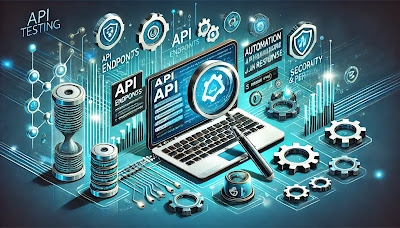
API Testing: The Foundation of Quality
For testing the core business logic,
performance, and stability of application interfaces, specialized API testing
tools are essential. The sources list RestAssured, Postman, and Karate
as leading options.
Separating UI and API tests is a
cornerstone of the "testing pyramid"
philosophy. API tests are faster, less brittle, and provide earlier feedback
("Shift Left"), making
them far more cost-effective for validating core functionality than slow UI
tests.
- RestAssured: A Java-based library highly
effective for testing REST services.
- Postman: Excellent for manual and
automated verification of APIs, particularly useful during development and
debugging.
- Karate: A versatile tool that combines
API test automation, mocks, performance testing, and UI automation
features.
3.
Reporting and Traceability: Understanding Results
Visibility into test results is
paramount for effective QA feedback loops. For comprehensive reporting and
traceability, modern teams integrate solutions like Allure and TestRail.
- Allure: Creates visually rich,
interactive reports that summarize test execution and provide clear
details on failures.
- TestRail: A popular test case management
tool used for planning, tracking, and organizing software testing efforts.
4.
CI/CD Integration: Automation at Scale
To ensure tests run automatically upon
every code change, the entire toolkit must be integrated into the Continuous
Integration/Continuous Delivery (CI/CD) pipeline. Tools like GitHub Actions,
Jenkins, and Azure DevOps are used to manage, schedule, and
execute the modular test suites.
Integrating testing into CI/CD ensures that quality checks are
continuous, preventing regressions from reaching later stages of development or
production, thereby formalizing the principle of "continuous quality".
Conclusion:
The Future is Interoperability
While Selenium is far from obsolete,
its era as the undisputed, single-tool king of QA is fading. Today’s successful
QA organizations are defined not by their loyalty to one framework, but by
their ability to select and combine the best-of-breed specialized tools
to maximize speed, stability, and confidence.
The shift demands
that QA professionals become quality architects, designing robust,
flexible systems that leverage tools like Playwright for speed, RestAssured for
reliability, and GitHub Actions for continuous delivery.
The modern
automation toolkit is like a high-performance race car. It doesn't rely on a single,
oversized engine. Instead, it uses specialized components like optimized
braking systems, specialized gearing, aerodynamic chassis that are perfectly
tuned to work together, resulting in maximum speed and reliability across every
curve of the track.
Refer to the blog below related to Selenium.
Mastering
Selenium Methods: A Technical Deep Dive
Mastering
Web Automation with Selenium: A Comprehensive Guide
Unleashing
Parallel Testing Power with Selenium Grid
Mastering
Selenium Exceptions for Robust Test Automation


Comments